
High quality lace front wigs are the new gold standard for versatile protective styling and for achieving a flawless undetectable hairline. A premium human hair unit gives you the most styling freedom and the most realistic movement. With proper maintenance and regular upkeep, these luxury investments will beautifully elevate your look for years to come.
Anatomy of a lace front wig: Why it looks so natural
The first step to appreciating the beauty of a premium wig is to understand how it is built. The subtle architecture balances esthetics and structural integrity for a flawless appearance.
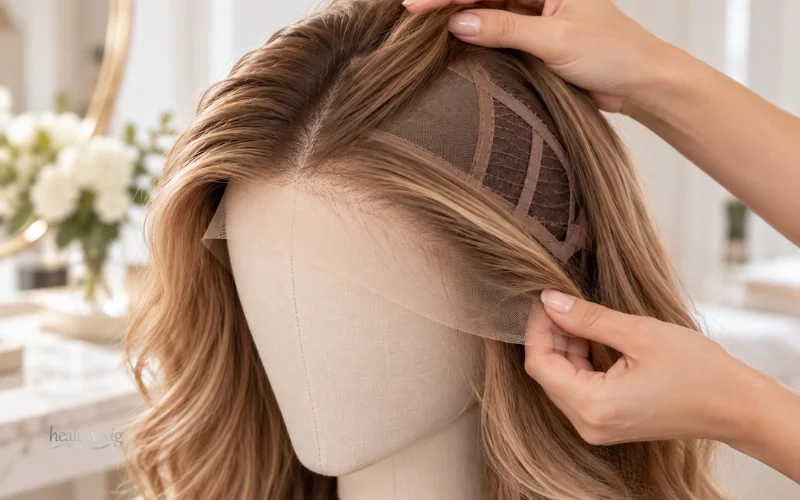
The hand-tied lace panel
The dainty sheer lace panel to the front of the unit is the heart of the illusion. The measurements are usually 13×4 or 13×6 inches from ear to ear and parted deeply to the back.
Expert artisans painstakingly hand ventilate each hair into this sheer base. The hair is hand-tied in a meticulous process with single or double knots that allow the hair to pivot and move as if it was growing out of your scalp.
Because the lace is nearly transparent, it creates a seamless transition against the skin. It effectively eliminates the bulky, unnatural edge that was historically associated with older, traditional wig designs.
The machine-wefted back
Front is made for perfect illusion, back and sides are built for long-lasting durability. This section is made of hair wefts, which are sewn by machine on a cap material that is both resilient and breathable.
These wefts will give you the volume and density you need for the hair to lay beautifully. The structured spacing between the wefts is meticulously measured allowing air to circulate freely around your natural hair underneath.
This thoughtful cap construction guarantees a comfortable, cooling stretch fit. It is exactly what makes premium wigs comfortable enough for all-day, everyday wear in various climates.
Built-in security (combs and straps)
A flawless hairline means nothing if the unit shifts or slides throughout the day. Premium caps are intelligently designed with adjustable straps at the nape of the neck to customize the exact circumference fit.
Many units also feature interior combs positioned strategically at the temples and the back. These gently anchor the cap into your natural braided hair for slip-free security without causing tension headaches.
Additionally, removable elastic tension bands are often included inside the cap. The bands pull the lace tight against your forehead, giving you a super secure fit without the use of any liquid adhesive.
Decoding lace types: HD lace, Swiss lace, and transparent
The type of lace material used will greatly affect how realistic your wig appears in various lighting conditions. There is no single “best” lace, but rather the perfect match for your specific skin tone and lifestyle.
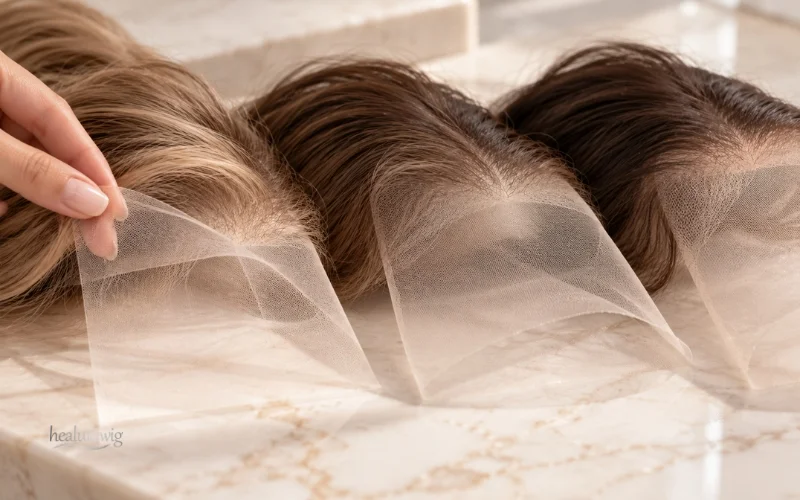
HD lace (high definition)
An HD lace frontal is crafted from the thinnest, most delicate material currently available on the market. Its ultra-fine texture is designed to melt invisibly into absolutely any skin tone effortlessly.
The fabric is so transparent that the lace grid practically disappears when pressed against the skin. It is the ultimate answer for high definition photography, bridal affairs, close ups and total perfection.
However, this delicate nature means it requires incredibly gentle handling during application and removal. It is a luxury material favored by professionals for special occasions rather than rigorous, athletic daily wear.
Swiss lace
Swiss lace serves as the dependable, trusted industry standard for high-end wig construction around the world. It is a bit thicker than HD lace but still super soft, realistic, and breathable.
Its durability is superior, making it the best choice for everyday wear and long-term protective styling. The durable fabric can withstand the frequent washing, styling and daily use much better than the thinner alternatives.
Swiss lace is usually available in a variety of soft shades such as light, medium or dark brown. This allows the user to get a close match to their natural complexion right out of the box with little to no customization.
Transparent lace
Transparent lace is essentially standard French or Swiss lace that lacks any pre-existing color pigment. You can make this material look white or translucent , unless you put a tint or foundation on it.
Traditionally, it is recommended for people with natural light/fair skin tones. However, this ultra-versatile lace is easily adaptable to deeper, richer complexions.
The transparent lace grid is often colored with lace tint sprays or powder foundation makeup by stylists. Exactly. This customization helps the hairline blend seamlessly to the wearer’s unique shade.
Premium human hair vs. synthetic lace front wigs
Your choice of fiber determines the life span, texture and styling restrictions of your hairpiece. Making this important distinction is critical to making a wise long-term investment.
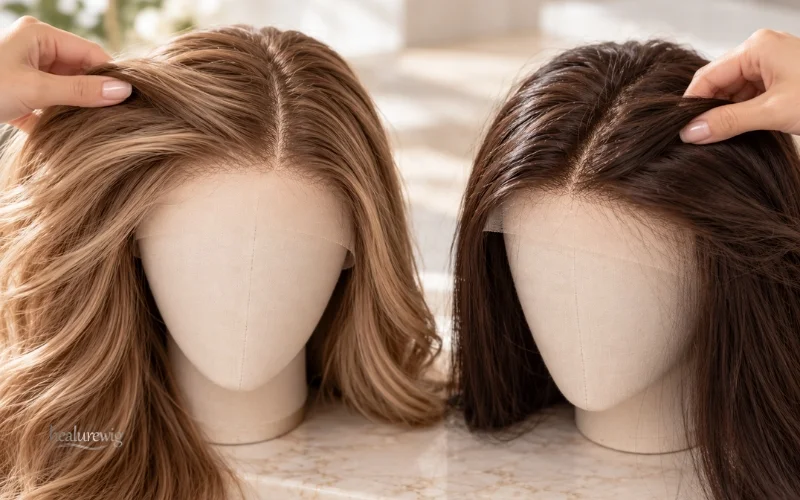
The virgin human hair advantage
100 human hair lace front wigs have the natural movement and supreme styling versatility that is unmatched. These units are the perfect canvas for professional cutting, custom coloring and everyday heat styling.
Premium units are made of virgin human hair or pure Remy hair, with cuticles intact and aligned, strictly. This important alignment of the cuticle stops extreme tangling and helps keep the hair soft, bouncy and glossy.
Ethically sourced human hair with consistent texture from root to tip you can count on. If well cared for, a pure human hair wig can be kept in perfect condition for years, thus representing a very economical investment in the long run.
High-quality synthetic options
Modern synthetic fibers have been greatly developed and have good heat resistance and very realistic textures. They are a great, inexpensive way to try out new colors and daring, temporary styles.
One of their biggest advantages is what the industry calls “style memory.” Even after washing, high-quality synthetic hair will snap back into its original wave or curl pattern with almost minimal effort.
However, synthetic fibers absolutely cannot be bleached or dyed to a new color. They also have a much shorter life span, gradually losing their softness and frizzing up with friction as they age.
The marks of premium craftsmanship: Pre-plucked hairlines and bleached knots
It’s the finishing touches that make the difference between a wig that looks like a hat and a hat that looks like a wig. Elite craftsmanship mimics natural human biology flawlessly.
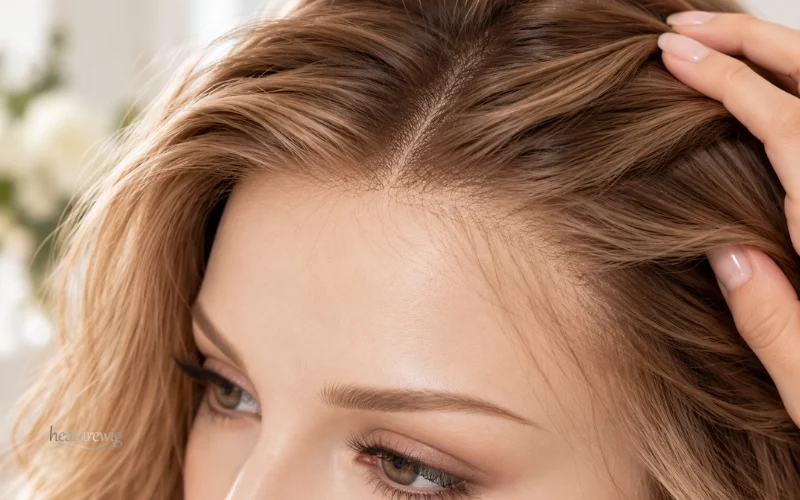
What is a pre-plucked hairline?
Biological hair does not grow in a dense, perfectly straight, uniform line across the forehead. A natural human hairline is always slightly finer and notably less dense at the very front baby-hair edges.
A pre-plucked hairline intentionally mimics this natural graduation of hair density. Artisans carefully remove excess hairs along the frontal boundary by hand to create a softer, vastly more realistic transition.
This time-consuming, expert detail saves the wearer hours of tedious, difficult customization at home. It allows the wig to look completely natural and ready to wear beautifully straight out of the box.
The importance of bleached knots
When hair is hand-tied to the lace base, it forms a microscopic knot directly at the root. On darker hair colors, these knots look like tiny black dots, creating an unnatural “grid” effect on the scalp.
To solve this, professionals carefully apply a gentle chemical lightener to these root knots. The bleached knots turn a light, flesh-toned blonde, effectively erasing the tiny black dots from visibility.
This crucial step creates the absolute illusion that the hair strand is growing directly out of your own pores. This is a true hallmark of truly premium, high-end wig construction and quality control.
How to install a lace front wig like a pro
The most secure wear and an undetectable, skin-like finish can be achieved by learning how to properly install lace front wigs. Proper technique will protect both your delicate wig cap and the natural hair underneath.

Step 1: Preparation and protective styling
To avoid a bulky or bumpy wig cap, your natural hair should be as flat as possible. The safest and most popular protective style is to braid your hair into neat, flat cornrows.
Once braided, scrub your hairline with rubbing alcohol to remove natural oils and makeup. This ensures a sterile, clean surface if you are planning on using any adhesive products.
Finally, apply a sheer, nude-colored stocking cap tightly over your braids. This creates a beautifully smooth foundation and mimics the exact color of a bare scalp beneath the lace.
Step 2: Customizing and cutting the lace
Before you apply any liquid glue or tension, you need to trim off the excess bare lace at the front. Place the wig on your head to measure exactly where your natural hairline naturally sits.
Using sharp pinking shears or small eyebrow scissors, cut the lace using a jagged, irregular motion. Avoid cutting in a perfectly straight line, as straight, blunt edges are easily detectable by the human eye.
Take care not to cut too close to the baby hairs or the actual dense hairline. Leave a quarter of an inch of sheer lace showing for a seamless blend into the skin.
Step 3: The glueless method vs. adhesives
The best glueless lace front wigs only use tension bands and interior combs to hold a tight fit. This technique is super safe, very comfy and perfect for everyday removal to give your scalp a breathing break.
Alternatively, liquid adhesives and specialized wig tapes offer a highly secure, semi-permanent hold. Depending on the specific brand and your body chemistry, glued installations can easily last anywhere from three days to two weeks.
If using glue, always apply very thin, even layers and let the adhesive dry completely clear before pressing the lace down. Never apply harsh glue directly to your natural, delicate baby hairs.
Step 4: Melting the lace
Lace melting is the final, transformative professional step that turns sheer lace into “skin.” Once the wig is secured, lightly spray a specialized lace holding spray along the very edge of the hairline.
Immediately wrap a wide, elastic melting band tightly around the perimeter of the entire hairline. Leave the band on for at least 10 to 15 minutes while you finish styling the rest of the hair.
The gentle tension and the setting spray force the lace completely flat against the skin while it dries. When you remove the band, the lace grid will have visually melted away into your complexion.
Expert care and maintenance for long-lasting wear
Routine lace front wig maintenance is completely non-negotiable for preserving your luxury investment. Proper care keeps human hair incredibly vibrant and prevents irreversible damage to the delicate lace cap.
Proper washing techniques
Always use high-quality sulfate-free shampoos designed for chemically or color-treated hair. Harsh sulfates strip the hair of the essential moisture. It doesn’t take long for the hair to become dry, brittle and unmanageable.
When washing, gently smooth the shampoo through the hair with one motion from top to bottom. Never scrub, rub aggressively or bunch hair together, as this will always result in severe tangling and permanent matting.
Rinse the hair thoroughly with lukewarm or cool water to perfectly seal the outer hair cuticles. Always follow up with a rich, hydrating deep conditioner to restore maximum softness and bounce.
Protecting the lace base
The delicate hand-tied knots at the front of the lace are extremely fragile and prone to unravelling. You must diligently protect this structural integrity during every single washing process.
Never apply heavy conditioners, hair oils, or thick deep treatments directly to the roots or the lace grid. The heavy slip of the conditioner will loosen the tiny knots, causing massive, irreversible hair shedding over time.
Always keep hydrating products heavily concentrated only on the mid-lengths and ends of the hair. Rinse the roots very quickly and gently to ensure the hand-tied knots remain secure and tight.
Brushing and detangling
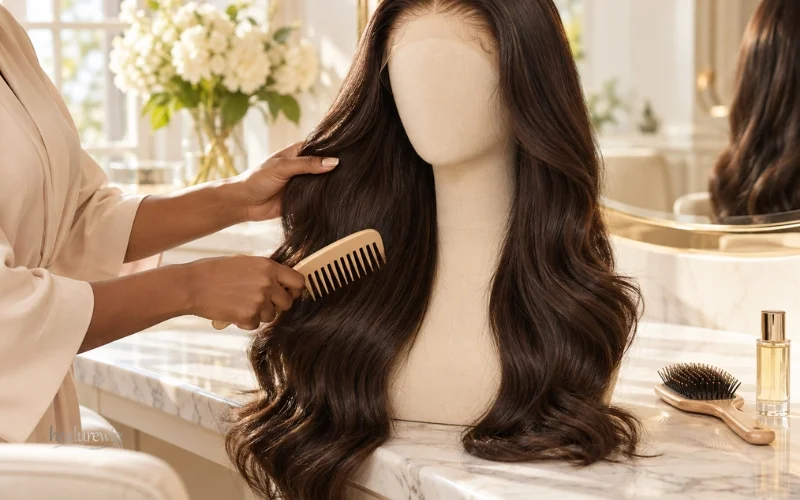
Human hair wigs require gentle, daily detangling to prevent severe knotting, particularly at the nape of the neck. Always use a wide-tooth comb or a specific flexible detangling brush designed for extensions.
Hold the hair firmly at the mid-shaft to prevent unnecessary, damaging tension on the delicate lace cap. Begin brushing very gently from the very ends of the hair, slowly and patiently working your way up to the roots.
Never rip a brush forcefully through completely dry, tangled hair. If you encounter a stubborn knot, use a lightweight leave-in conditioner spray to provide slip and gently pull it apart with your fingers.
Safe storage
How you store your wig when you are not actively wearing it drastically impacts its total lifespan. Tossing it carelessly on a counter quickly leads to deep tangles, dust accumulation, and a total loss of shape.
Always place your wig on a proper canvas block head or a specialized, breathable wig stand. This maintains the precise structural shape of the cap and prevents the hair from permanently creasing.
If storing the unit for a long period, place it safely inside a protective silk or satin storage bag. Avoid oxidation of the beautiful color and premature fading by keeping out of direct sunlight and extreme heat.
Lace front wigs vs. closures and full lace
Knowing the unique differences in cap construction enables you to choose the perfect unit for your particular lifestyle. Each design has its own balance of styling versatility, ease of use and durability by nature.
Lace front vs. full lace wigs
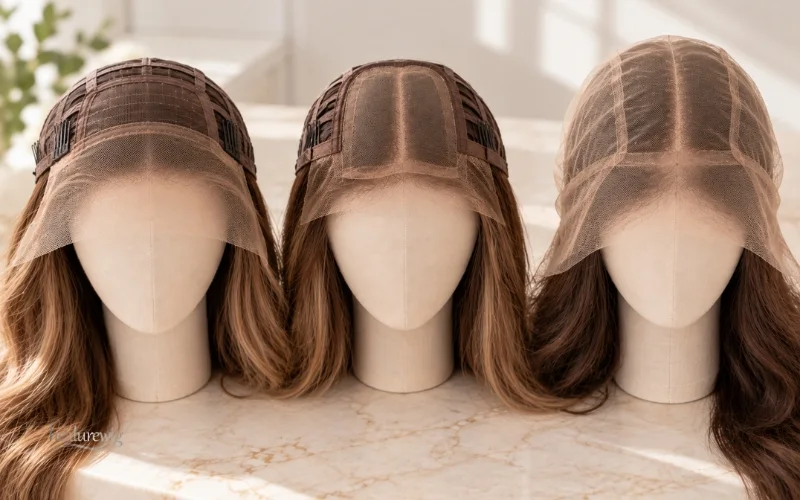
A lace front provides a stunning ear-to-ear parting space strictly at the front hairline. The rest of the cap is made of durable machine wefts, making it incredibly sturdy, highly breathable, and easy to maintain.
A full lace wig features a cap made entirely of hand-tied lace, allowing for complete 360-degree parting. You can part the hair anywhere and wear high ponytails, but the cap is extremely delicate and significantly more expensive.
For the vast majority of wearers, the frontal option provides the absolute perfect balance. It delivers a stunning, highly realistic hairline while remaining durable enough for the rigors of everyday life.
Lace front vs. closure wigs
Closure wigs have a much smaller patch of lace, usually 4×4 or 5×5 inches, right at the top crown. They’re super beginner friendly, no glue required and very little (if any) customization.
However, closures genuinely only allow for a middle part or a very slight side part within that small, limited square. You cannot pull the hair back away from the face seamlessly without exposing the cap edges.
Lace fronts (like 13×4 or 13×6) provide total, uncompromising versatility across the entire forehead. You can effortlessly create deep side parts, sweeping bangs, or gorgeous half-up styles with a completely undetectable edge.
FAQs: Lace front wigs
How long does a 100% human hair lace front wig last?
With proper professional care, gentle styling, and minimal heat abuse, a premium virgin human hair unit can easily last between 1 to 3 years. Consistent maintenance, sulfate-free washing, and proper block-head storage are the absolute keys to its longevity.
Can I sleep in my lace front wig?
Yes but it has to be tied up properly and wrapped in a silk bonnet or scarf to minimize friction dramatically. But picking a glueless method for safe daily removal will go a long way toward increasing the overall lifespan of the wig and protecting your natural edges.
Will wearing a lace front wig damage my edges?
Not if installed and removed properly with extreme patience and gentle care. Always use an oil-based adhesive remover to safely dissolve glue, and never ever forcefully pull or rip the lace off your delicate skin.
What density should I choose for my wig?
130% density is a nice light everyday volume, very realistic and mimics natural biological hair beautifully. A 150% density provides a fuller, standard look, while 180% and above delivers wonderfully thick, glamorous, voluminous styles ideal for very long lengths.
Can I swim or work out in my lace front wig?
Yes, provided you use high-quality, water-resistant adhesives or a very secure glueless elastic tension band. However, harsh chlorine and salt water aggressively strip the cuticles of human hair and should be immediately followed by thorough washing and deep conditioning to protect the strands.
A premium unit is a genuine investment in your confidence, with endless versatility and a stunningly realistic look. Proper installation and expert maintenance will ensure that your lace front wigs always provide flawless, natural beauty. We invite you to experience the Healurewig carefully curated collection of pure human hair designs, crafted with uncompromising quality for those who demand an extraordinary standard.