
A premium human hair wig is a significant investment in your personal style and confidence. Learning how to detangle a human hair wig properly is essential to maintaining its natural movement, luster, and longevity over years of wear.
Understanding why human hair wigs tangle

Even the highest quality Remy hair is subject to environmental stressors. Unlike natural hair, a wig does not receive sebum from the scalp to keep the cuticle lubricated.
Friction is the primary culprit behind knots, particularly at the nape of the neck. When hair rubs against coat collars or scarves, the cuticles can interlock, creating stubborn tangles.
Sweat, makeup, and atmospheric humidity also play a role. These elements cause the hair fibers to swell or become tacky, leading to “bird’s nesting” if not addressed daily.
Understanding these mechanics helps you approach the detangling process with the necessary patience. It is not just about removing knots, but about preserving the integrity of each strand.
The essential toolkit for professional maintenance
Before you begin, you must have the right instruments. Using the wrong brush can cause irreversible shedding or “stretch” the hair fibers until they snap.
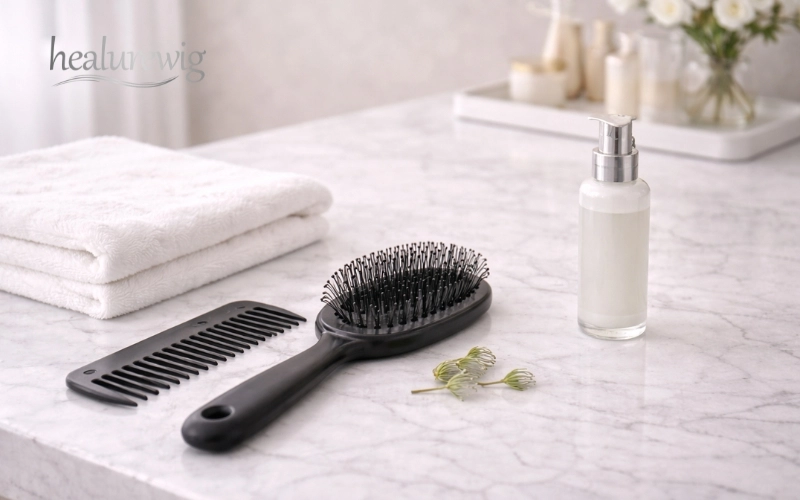
The wide-tooth carbon comb
A wide-tooth comb is your most important tool. Look for seamless, heat-resistant carbon or high-quality wood to avoid static and snagging on the hair shaft.
The professional loop brush
For daily grooming, a loop brush is ideal. The unique looped bristles glide over the hand-tied knots on the lace without catching or pulling them loose from the cap.
Silicone-based detangling serums
Quality human hair thrives on high-grade silicones. These products mimic the natural cuticle layer, providing the “slip” needed to slide knots apart without tension.
Mannequin head and T-pins
Stability is crucial for safety. Securing your unit to a canvas block or mannequin head allows you to see every angle and prevents you from pulling too hard on the lace foundation.
How to detangle a human hair wig: The step-by-step method
Restoring a tangled unit requires a methodical, “zero-tension” approach. Follow these professional steps to ensure your wig remains as voluminous and healthy as the day it arrived.

Step 1: Secure and prep
Place your wig on a mannequin head and secure it with T-pins. Be careful to pin through the ear tabs or the sturdy ribbon at the back, never through the delicate HD lace.
Step 2: The quadrant sectioning
Divide the hair into four manageable sections: two in the front and two in the back. Use professional clips to keep the hair organized and prevent re-tangling during the process.
Step 3: Apply a detangling agent
Lightly mist the hair with a professional-grade leave-in conditioner or a diluted detangling spray. Focus on the mid-lengths to the ends where the most friction occurs.
Step 4: The bottom-up technique
Always start at the very tips of the hair. Hold the hair firmly above the section you are combing to absorb the tension, ensuring no pressure is applied to the cap’s knots.
Gently work your way upward, one inch at a time. Once a section is clear, run your comb from the root to the tip to ensure a completely smooth, snag-free finish.
Advanced restoration for severely matted units

If a wig has been stored improperly or neglected, it may require a “deep restoration” treatment. This goes beyond standard brushing and involves a controlled hydration process.
The “conditioning soak” is highly effective for heavy matting. Submerge the hair in lukewarm water mixed with a high-moisture conditioner for 20 minutes before attempting to comb.
For exceptionally stubborn knots, some professionals use a handheld steamer. The gentle heat and moisture expand the hair slightly, allowing the fibers to release their grip on one another.
Never use a flat iron to “smooth out” a tangle. High dry heat will effectively “bake” the knot into the hair, causing permanent damage and making the breakage inevitable.
Protecting the delicate lace foundation

When learning how to detangle a human hair wig, many forget the foundation. The lace is the most fragile part of the construction and requires expert handling.
Avoid applying heavy oils or thick conditioners directly to the base of the wig. These products can lubricate the hand-tied knots, causing them to slip and lead to premature shedding.
If you find tangles near the root, use a fine-tooth comb only after the mid-lengths are clear. Use a “tapping” motion with the comb to gently separate the hairs at the base.
Periodically check the underside of the cap. Sometimes, “return hairs” can poke through the lace and create tiny knots on the interior, which should be smoothed back out carefully.
Preventive care: Reducing daily friction
The best way to manage tangles is to prevent them from forming. A proactive maintenance routine can double the lifespan of your premium human hair unit.
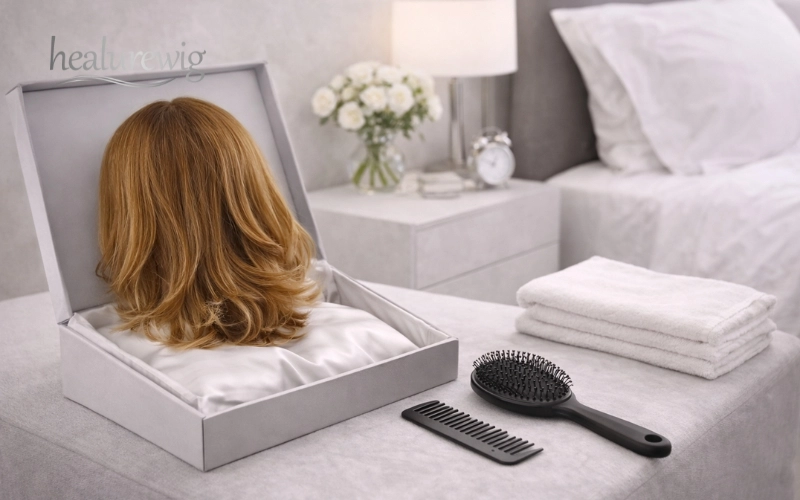
The nighttime protocol
If you wear your wig to sleep, always secure it in a loose silk wrap or braid. Switching to a 22-momme silk pillowcase is non-negotiable for reducing overnight friction.
Product selection
Avoid hairsprays with high alcohol content, as they dehydrate the hair and create a “crunchy” texture that attracts dust. Opt for flexible-hold, moisture-rich styling products instead.
Regular “reset” washes
Every 10 to 15 wears, perform a clarifying wash. This removes the buildup of serums and environmental pollutants that cause the hair to feel heavy and prone to matting.
FAQ: Expert answers to common detangling questions
Can I detangle my human hair wig while it is wet?
It is safest to detangle while the hair is slightly damp and saturated with conditioner. Fully wet hair is more elastic and prone to stretching or snapping if handled roughly.
Why does the nape of my wig tangle every single day?
This is caused by “nape friction” against your skin and clothing. Applying a small drop of silicone serum to the nape area every morning can significantly reduce this issue.
How do I know if my wig is too tangled to save?
If the hair has formed hard “felting” or “dreadlocks” that do not move when moisture is applied, it may require professional thinning or repair by a specialized clinic.
Does the hair quality affect how much it tangles?
Absolutely. Premium, cuticle-aligned Remy hair tangles far less than “non-Remy” hair, which has been chemically stripped and coated in temporary silicone.
Should I use a blow dryer after detangling?
Air drying is best for longevity. If you must use a dryer, use the “cool” or “low” setting and always point the airflow downward to keep the cuticles flat and smooth.
The role of hair quality in long-term maintenance
While technique is vital, the raw material of your wig determines your success. High-end human hair units are engineered to behave like healthy, natural hair.
When you invest in a unit with intact, unidirectional cuticles, the strands naturally slide past each other. This “mechanical slip” is the hallmark of a professional-grade product.
Lower-quality hair often lacks this structural integrity, meaning no amount of detangling will ever truly restore its original flow once the factory coating wears off.
By choosing premium hair and following these expert care steps, you ensure that your look remains flawless and your hair remains a source of pride rather than a maintenance burden.
Mastering how to detangle a human hair wig ensures your premium investment maintains its salon-quality finish and natural movement. For the best results, always start with the high-integrity human hair products found at Healurewig.