
Investing in a premium wig is a commitment to your confidence and personal style. You may naturally wonder, how long can a lace front wig last before needing replacement? The timeline depends on product quality, base materials, and your maintenance routine. Keep reading to discover how to maximize your investment and extend the lifespan of your hair.
The short answer: Average lifespans of lace front wigs
The hair material is the defining factor when it comes to calculating the exact lifespan of your unit. The level of resistance to daily wear and tear, friction and environmental damage varies greatly between different fibers.

Human hair lace front wigs
A good quality human hair lace front wig should last anywhere from one to three years. Some carefully looked after units can even survive beyond this period with proper maintenance and periodic rotation.
Human hair’s extraordinary lifespan makes it the perfect choice for those seeking a long-lasting, realistic hair replacement. The pricier investment up front is worth its weight when spread out over years of perfect wear.
The secret to this durability is the natural cuticles of the hair shaft. 100% human hair is like your biological hair in that it has the same structural integrity as it did when it was born and can stand up to heat styling and weather stress.
Unlike cheaper alternatives that tangle irreversibly, high-quality human hair maintains its natural flow and bounce. This inherent strength is what prevents the hair from snapping off at the lace base during routine brushing.
Synthetic and heat-defiant synthetic wigs
Standard synthetic wigs generally have a much shorter lifespan than their human hair counterparts. Typically, an everyday synthetic wig will only last between three to six months before showing permanent signs of wear.
Even with a meticulous maintenance routine, plastic synthetic fibers are highly prone to friction damage. This friction quickly leads to coarse, irreversible tangling, particularly at the nape of the neck.
Synthetic blends that are heat-defiant have more durability because of the fiber coatings. If worn infrequently and treated with extreme care, these units can last up to a year.
But heat-friendly synthetics still can’t compare to the natural resiliency of premium human hair. With time the synthetic fibers become stiff and lose their real movement permanently, and they have to be replaced early.
The anatomy of durability: What determines a wig’s lifespan?
If you want to get longevity, look at the sourcing and making of a high-end wig. Advanced construction methods are an immediate indication of a premium product that is specifically built to last.
Hair sourcing and processing
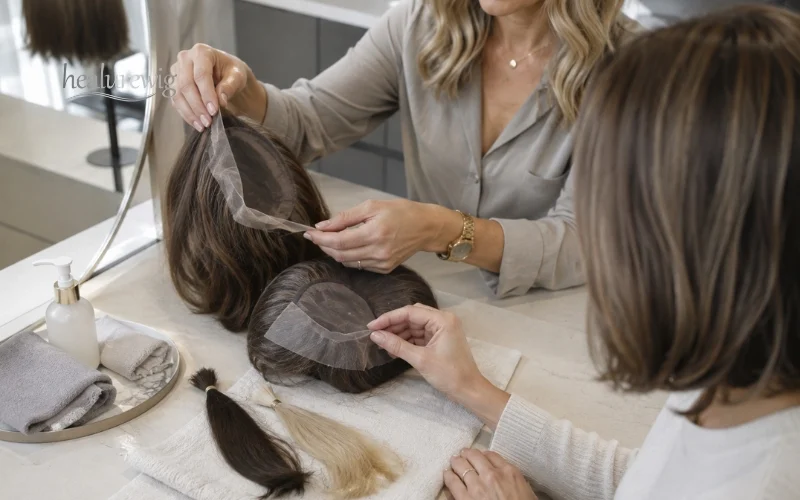
The raw material’s origin directly dictates the future lifespan of the finished wig. Ethically sourced Remy is the gold standard in the premium hair industry across the board.
Remy hair means all cuticles remain completely intact and aligned in a single direction. This exact alignment naturally inhibits the severe tangling and matting that quickly destroys lower quality, mass produced units.
Furthermore, the amount of chemical processing has a significant effect on the long term strength of the hair.. Virgin hair, or hair that has been gently processed into darker tones, will always outlast heavily bleached strands.
Lifting dark hair to a platinum blonde inherently weakens the internal protein structure of the hair shaft. Therefore, lighter wigs require significantly more moisture and care to reach their maximum lifespan.
Base materials: HD lace vs. Swiss lace
The base of your wig is a strategic compromise between total invisibility and long-term structural durability. HD lace is so fine and delicate that it melts perfectly into the skin for an undetectable hairline.
However, because HD lace is woven so thinly, it requires extremely gentle handling to prevent microscopic tears. Over time, excessive pulling on an HD lace front can cause the material to stretch permanently.
Standard Swiss lace is slightly thicker and much more robust. It offers far better resistance to daily tension, a noticeably longer overall lifespan, and better structural support for heavier hair densities.
While Swiss lace is slightly more visible up close, its rugged durability makes it a favorite for everyday wear. It can withstand repeated adhesive applications and removals without rapidly deteriorating.
Advanced construction and knotting techniques
How the hair is manually tied to the lace base plays a massive role in preventing premature shedding. Single knots at the front hairline look incredibly natural but are structurally fragile by design.
Conversely, double knots used at the crown and the back of the cap are much thicker and highly durable. To achieve a natural look with structural fortitude, a premium wig expertly blends these knotting techniques.
Luxury innovations such as Silk Top construction or Hidden Knot technology extend longevity even more. These premium caps hide knots completely by sandwiching them between layers of silk or ultra-fine lace.
This advanced technique not only creates a hyper realistic scalp look but also perfectly protects the knots from everyday friction. Shedding is drastically reduced when the knots are locked away, inherently extending the life of the entire piece.
Wear frequency: Daily wear vs. occasional rotation
Even the best of human hair wigs will eventually wear out from constant use. A big part of long-term wig maintenance is managing your expectations with regard to your lifestyle and your wearing habits.

The impact of daily wear
Over the course of a day, the harsh UV rays, unpredictable weather, and indoor heating slowly degrade the hair. Rubbing against high neck collars, scarves and winter coats also degrade the hair fibers at the nape.
And also, your natural sweat and body oils will slowly start to break down the delicate lace base. An active lifestyle that includes daily gym sessions will accelerate this wear and tear even further.
If you wear your wig for fourteen hours a day, seven days a week, it will naturally reach its end faster. A daily-worn human hair wig is more likely to sit closer to the one-year mark of its lifespan.
The “wig wardrobe” strategy
Industry professionals strongly advocate for rotating between two or more high-quality wigs. This simple strategy dramatically reduces the environmental and physical stress placed on a single unit.
Giving a wig regular “rest days” allows the cap base to breathe and regain its original structured shape. It also drastically reduces the frequency of washing and heat styling needed for a single piece.
This clever rotating technique can easily double the life of both hairpieces in the end. And a spare wig means you can go slowly with your fragile washing and air-drying routine.
Expert maintenance: How to make your lace front wig last longer
The single most important key to protecting your financial investment is proper maintenance. These step-by-step processes will maintain your wig’s vibrancy, softness, and structure for years to come.
The proper washing routine
Over-washing can strip your hair of its essential moisture, leaving it dry and brittle, and prone to breakage. On the other hand, if you don’t wash your hair enough, acidic scalp oils and sticky residues will slowly eat away at the lace.
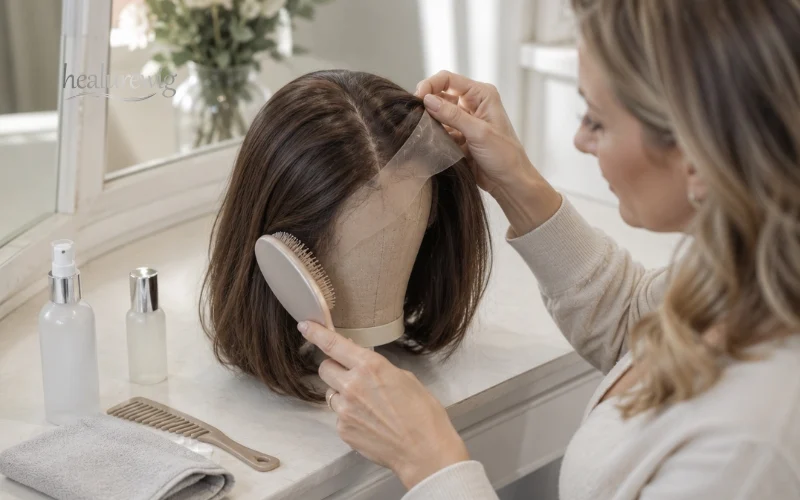
Try to wash your wig only after eight to ten wears depending on your physical activity level. Always comb the hair out well with a wide tooth comb before immersing it in water to avoid extreme tangling.
Always use the gentle “soak and press” method in a basin, avoiding any aggressive scrubbing or wringing motions. You must use sulfate-free, moisture-rich products specifically formulated for high-end human hair.
Protecting the lace and preventing shedding
Shedding is the leading cause of premature wig replacement. You can actively combat this by regularly applying professional knot sealers to the inside of the lace cap after every single wash.
When applying or removing the unit, never pull it down by forcefully tugging on the delicate lace front. Always adjust the wig using the reinforced ear tabs or the thicker nape area to prevent tearing.
Finally, take care not to over-bleach the knots so that they resemble a scalp. Too much bleach will totally weaken the hair shaft at the root and cause a lot of shedding and bald spots on the lace.
Safe styling and heat protection
Premium human hair can be heat styled just like your biological hair, but thermal protectants are mandatory. Never apply flat irons or curling wands without first coating the hair in a high-quality heat spray.
Always respect the safe temperature zones for human hair, consistently keeping hot tools below 350°F (175°C). Excessive heat will permanently fry the cuticles and cause split ends that cannot be repaired.
When brushing, always start gently from the very ends of the hair and slowly work your way upward. Use a special loop brush or a seamless wide tooth comb to avoid unnecessary tension on the delicate knots.
Nighttime care and storage
Sleeping in a lace front wig is highly discouraged by hair replacement professionals. Nighttime tossing and turning creates severe friction damage to the hair while simultaneously stretching the delicate lace base.
If you absolutely must sleep in your unit, take preventative measures to protect the hair. Secure the lengths in a loose braid, wrap the hairline in a silk scarf, and only use a satin pillowcase.
Proper daily storage is equally critical to longevity. Store your wig on a canvas block head or a wig stand designed for wigs to keep the proper ergonomic shape of the cap.
Store the unit away from heat and direct sunlight as this can cause premature color fading of hair. Hair should be kept dust-free in a dedicated shelf in the closet or a breathable satin storage bag.
Recognizing the signs: When is it time to replace your wig?

Even if you take perfect care of your wig, it will have to be replaced entirely at some point. Knowing the early warning signs of structural failure can save you from an embarrassing hair mishap.
Permanent lace damage such as heavy fraying, small tears or irreversible stretching at the hairline. Once the lace loses its tension, it will no longer lay flat against your forehead.
Other critical signs include irreversible matting at the nape, where heavy deep conditioning no longer restores free movement. Permanent texture changes, where the hair feels chronically brittle and straw-like, also indicate expiration.
Excessive shedding is a major red flag that the knots have permanently failed. If you notice visible bald patches at the front hairline that cannot be fixed by a ventilation specialist, it is time for a new unit.
FAQs: How long can a lace front wig last?
Can a lace front wig last 2 years?
Yes, a high-quality Remy human hair wig can easily last two years or more. This exceptional longevity requires wearing the wig in a rotation and maintaining a meticulous, moisture-focused professional care routine.
Does sleeping in a lace front ruin it?
Consistently sleeping in your wig heavily accelerates daily wear and tear. The constant tossing creates severe friction damage to the cuticles while simultaneously stretching and permanently weakening the delicate lace base.
Why is my lace front wig shedding so much?
Shedding is typically caused by aggressive brushing, scratching your scalp through the lace, or skipping knot sealer. Harsh knot bleaching during the manufacturing process can also severely weaken the hair at the base.
Is it better to glue or sew a lace front wig for longevity?
Glueless methods or gentle daily adhesives put far less physical tension on the delicate lace. Heavy glues need harsh solvents to remove, and tight sewing causes chronic tension, both of which reduce the lifespan of the cap.
Understanding exactly how long can a lace front wig last empowers you to make smarter, long-term beauty investments. Proper care, gentle handling and strategic rotation will easily double the lifespan of your hairpieces. When you’re ready to step up to premium hair that lasts, is ethically sourced, browse through Healurewig’s exceptional collections to experience uncompromised quality and durability.