
Premium human hair wigs are the most beautiful wigs available. But they need some expert care and the right measurements to look their best. Understanding your exact finish length is the secret to ensuring your investment falls beautifully and complements your natural silhouette.
What exactly is “finish length” in wigs and hair systems?
Measurement is one of the most misunderstood specifications when selecting a hair replacement system. Most of our clients believe that the numbers on the box have a direct correlation to where the hair will fall on the shoulders.
But professional stylists know these numbers only tell part of the story. The only way to tell how a piece will wear is to measure it in its final, fully assembled state.
It is particularly important for end-users and professional custom designers. It determines the final drape, styling potential and visual balance of the final product.

Finish length vs. raw hair length
To really understand this concept we need to compare finished length vs hair length. The journey begins with premium raw bundles, ethically sourced and sorted carefully by length.
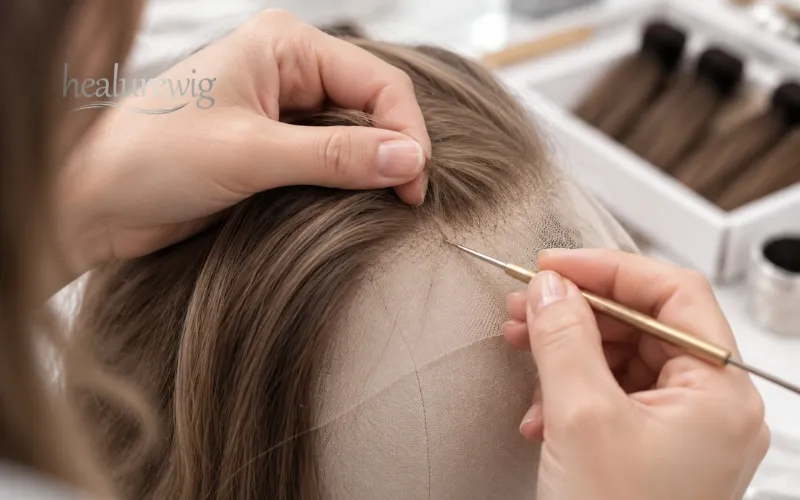
In the intricate process of knotting, artisans tie these strands to a base of lace or monofilament. Each strand is folded over the base material and tied tightly down to secure the hair.
The fold creates two separate sections, the main flowing length and the shorter “return hair.” Because a portion of the strand is used to form the knot, the original raw length is reduced by several inches.
Therefore, an 18-inch raw bundle will never result in an 18-inch final piece. The measurement you see on a premium product reflects the exact wearable length after this complex manufacturing phase.
Why precision matters in high-end hair replacement
In the world of high-end wigs, precision is everything. An inch of difference can alter a bob into a lob, completely changing the frame of a client’s face.
Premium brands commit to rigorous quality control to ensure these measurements are completely true-to-length. This guarantees that salon owners and end consumers receive exactly what they expect every time.
Accuracy also builds trust and takes the guesswork out of the buying process. Reliable measurements mean stylists can be confident they are advising their clients on the right premium wig length.
The anatomy of a measurement: How to accurately measure finish length
Knowing how to correctly measure a wig is a crucial skill for anyone looking to invest in luxury hair. The number one reason people get frustrated when styling a new unit is incorrect measuring techniques.
Using a standard approach, you can accurately assess your piece before you make any styling decisions. This safeguards your investment and guaranties smooth communication with your stylist.
The crown-to-tip method
Industry standard human hair wig measurements are measured from the top (crown) to the tip. First, place your unit on a canvas block head to replicate the way it sits on a natural head.
Find the exact crown, which is the highest middle point on the top of the wig cap. Use a wide-tooth comb to gently smooth hair down, eliminating any tangles.
Avoid tugging the hair aggressively as this can ruin the natural fall. Finally, use a soft measuring tape to measure straight down from the crown to the longest strand at the bottom.
Measuring layered vs. blunt cuts
Your measurement technique must adapt based on the specific style of the unit. For solid, blunt cuts, the crown to tip measurement will reflect a uniform perimeter around the base.
However, measuring a beautifully layered wig requires a slightly different understanding. In a layered piece, the stated measurement always refers to the absolute longest layer, usually found at the back.
Shorter face-framing layers at the front or top are cut intentionally to create volume and movement. Therefore, a 20-inch layered wig will have 20-inch strands at the nape, but shorter pieces throughout the crown.

How texture and styling alter the perceived finish length
Two wigs that measure exactly the same can appear very different if their textures are different. This optical illusion is an important consideration in using our extensive wig length guide.
The structural pattern of the hair fiber naturally lifts the strands upward, drawing the ends closer to the root. Understanding this behavior prevents surprises when your beautifully textured unit arrives.
The “shrinkage” factor in wavy and curly units
Wavy and curly textures experience a phenomenon known as visual shrinkage. Because the hair coils upon itself, an 18-inch curly wig will never rest as low as an 18-inch straight wig.
As a general rule of thumb, deep waves and loose curls can shrink by two to four inches visually. Tighter curl patterns can experience an even more dramatic visual reduction of up to six inches.
When choosing a textured style, always calculate this shrinkage into your final decision. If you want a curly look that falls to your mid-back, you must order a significantly longer initial length.
Straightening to verify length
If you are unsure whether your textured wig is true-to-length, you can easily verify it. Because you are working with premium human hair, the strands can safely handle gentle tension.
Isolate a small section of hair near the back of the unit. Gently pull the curl taut until the strand is completely straight, then measure from the root to the tip.
This simple test will confirm the exact finish length of the piece. Once released, the premium hair will instantly bounce back into its original, carefully crafted texture.

Does cap and base construction impact finish length?
The foundation of a wig plays a surprisingly significant role in how the hair falls. Different base construction techniques dictate the volume, lift, and directional movement of the strands at the root.
A standard wefted cap will distribute hair differently than a fully hand-tied luxury base. These subtle architectural differences can influence where the final perimeter rests against your body.
Multi-layer bases: Silk top and French drawn techniques
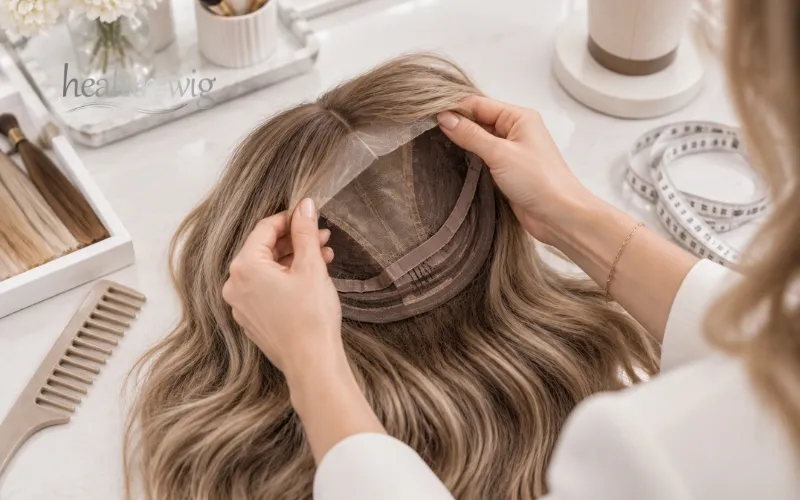
Premium constructions like the silk top base offer the most realistic scalp appearance available. These caps use multiple layers of material to seamlessly conceal the knotting work.
The highly coveted French drawn technique goes a step further, hiding the knots entirely between layers of glass silk. Because the hair is injected through these layers, it stands slightly taller at the root before falling.
This beautiful, natural root lift adds incredible volume to the crown. However, this slight elevation can cause the hair to fall just a fraction of an inch higher on the shoulders.
Lace fronts and hidden knots
A flawless hairline is the hallmark of a luxury hair replacement system. Lace front high-end units are characterized by a delicate lace front that results in a seamless undetectable look against the skin.
To achieve this realism, the artisans use single-knot or hidden knot techniques along the very front edge. This specialized knotting reduces bulk, allowing the hair to lay incredibly flat and natural.
Because there is no heavy root volume at the hairline, the hair drapes smoothly and closely to the face. This allows the finish length to maximize its full, elegant drop without being distorted by bulky roots.
Choosing the right finish length for your lifestyle and silhouette
Choosing the right measurement is a personal decision that affects your day-to-day life. The right length will enhance your personal style and fit perfectly with your lifestyle.
How much time will you put into styling and maintenance? Also consider how the length will fit with your daily wardrobe and your professional environment.
Short to medium lengths (8″ – 14″)
Lengths between 8 and 14 inches are incredibly popular for sleek bobs, textured lobs and classic cuts. These styles are very sophisticated and are typically much easier to maintain on a day to day basis.
Shorter lengths drastically reduce the friction caused when hair rubs against heavy collars or winter scarves. This reduced friction extends the overall lifespan of the hair, keeping the ends looking thick and healthy.
AA 12 or 14-inch will give you enough hair to curl or pull back without having to do too much heavy detangling. It’s the best choice for a sleek, easy-care look.
Long and extra-long styles (16″ – 24″+)
Lengths from 16 to 24 inches are wonderfully versatile for high impact glamor. Long premium wig lengths create a luxurious flowing drape that turns heads.
The generous lengths are the ultimate canvas for intricate updos, voluminous Hollywood waves and elegant braids. But long human hair is heavier by nature and so requires more dedicated care.
Extra-long styles require regular hydrating and careful brushing to keep them looking their best. The investment in maintenance is beautifully rewarded by the breathtaking, fluid movement of the hair.
Factoring in customization by a professional stylist
The secret to a truly undetectable wig is professional customization. We highly recommend having a salon expert cut and blend your new piece to perfectly frame your unique facial features.
When planning for customization, it is critical to purchase a finish length at least two inches longer than your goal. This extra margin gives your stylist the necessary canvas to create seamless layers or custom bangs.
The trick is to initially use something a little longer so you don’t accidentally mess up your desired final silhouette during the styling process.

Human hair vs. synthetic: Retaining your finish length
The quality of your wig will determine how long your wig will hold its original measurements. Not all fibers age the same way and understanding these differences is key to protecting your investment.
Although pre-styled, synthetic fibers are subject to structural friction wear that quickly degrades the ends. This can cause you to cut the wig, and then its length is forever altered.
Density and weight distribution in premium human hair
The good thing about human hair is that it maintains its shape well. In the production of premium pieces, hair density is meticulously calculated, so that the hair is thick and healthy from root to tip.
The cheaper varieties tend to thin out dramatically toward the bottom, leaving hair looking straggly and a lot shorter than advertised. This premium unit maintains its luxurious weight distribution with all ends full and voluminous, showing its true length.
Such density provides the hair a natural fall, mimicking the movement of a healthy biological mane.
Preventing breakage to maintain true length
To preserve your finish length, you must actively prevent split ends and mechanical breakage. Because wig hair cannot receive natural oils from the scalp, manual hydration is absolutely essential.
Use professional-grade, sulfate-free moisture treatments at all times to keep strands flexible and strong. Use a special brush and be gentle when detangling. Start at the bottom and slowly work your way up toward the nape.
Sleeping on a silk pillowcase or storing the wig properly on a block head will also prevent unnecessary friction. By eliminating breakage, your wig will maintain its exact original length for months or even years of beautiful wear.

FAQs: finish length
Why does my 18-inch curly wig look shorter than my 18-inch straight wig?
This is due to visual shrinkage. The coiling pattern of wavy and curly textures naturally lifts the hair upward, making it appear 2 to 4 inches shorter than straight hair of the exact same measurement.
How much length is lost during the knotting process?
During ventilation, the raw hair is folded over the base to form the knot and the shorter return hair. This required technique usually takes 3 to 4 inches off the raw bundle length to come up with the finished measurement.
Does the cap size alter where the finish length falls on my body?
Yes. A petite cap sits higher on the head, which may cause the hair to fall slightly shorter on your frame. Conversely, a larger cap drops lower on the scalp, which can subtly shift the perimeter lower on your shoulders.
Should I order a longer finish length if I want heavy layers?
Absolutely. If you plan to have a stylist customize your unit with heavy layers, you should order a length 2 to 3 inches longer than your final desired look. This provides the necessary hair to shape the style properly.
Understanding your exact finish length empowers you to select the perfect style with absolute confidence. The accuracy of these measuring methods and the inclusion of texture can make sure your hair replacement piece is in line with your vision. Experience the reliable quality, accurate length measurements and no-fail daily wear of our gorgeous collection of ethically sourced, precision crafted human hair products from Healurewig.