
While investing in premium human hair systems guarantees the ultimate in realism, the summer months bring extreme environmental stressors that require technical care. Wearing wigs in the summer exposes delicate hair cuticles and base materials to intense UV radiation, high humidity, and increased thermal heat.
Basic maintenance isn’t enough to keep your unit structurally sound during these busy months. By understanding the science of environmental degradation and implementing specific summer protocols, you can keep your hair system flawless and comfortable even in the most extreme climates.
Combating UV oxidation and solar degradation
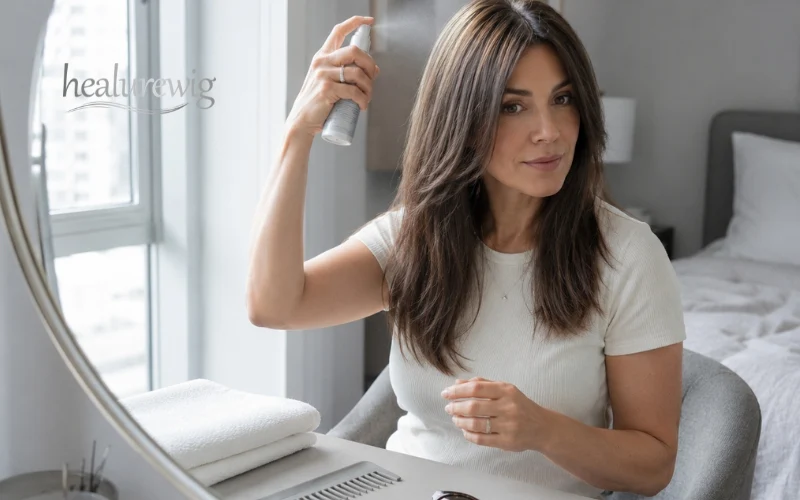
The photochemical impact on hair pigment
Summer sunlight is a concentrated source of ultraviolet (UV) radiation which initiates the photochemical reaction of organic hair. The UV exposure is a natural bleaching agent, which breaks down the melanin pigments over time and alters the dimensional color of the carefully crafted unit.
Furthermore, these rays weaken the disulfide bonds within the hair shaft, leading to a loss of elasticity and increased brittleness. For lightly processed, premium human hair, this solar degradation can cause unwanted brassiness and a dry, coarse texture.
Implementing a daily UV defense shield
A specialized UV-protectant hair mist is non-negotiable for summer wear, like a high-SPF sunscreen. These lightweight, leave-in formulas create an invisible barrier around the cuticle to deflect damaging UVA and UVB rays away from the hair shaft.
Before you style your hair, work the product through damp hair, making sure to get plenty on the top layers and crown, which are most exposed to the sun. And remember to reapply during long outdoor events to keep that color saturation and moisture balance in check.
Managing scalp microclimates and acidic perspiration
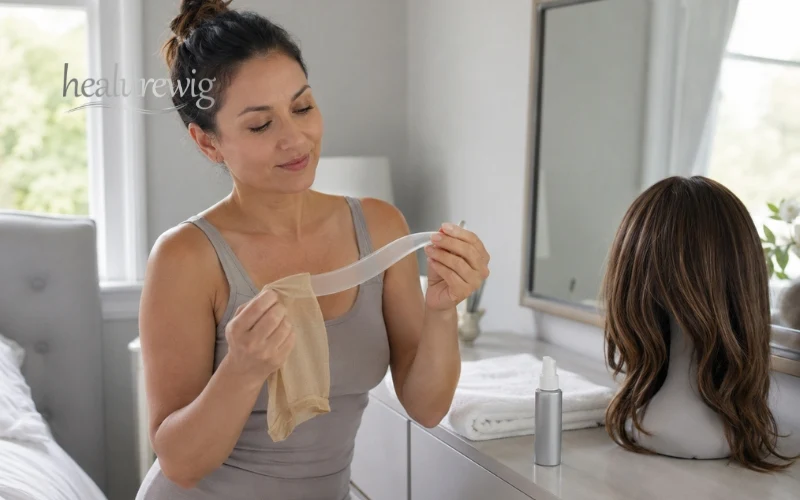
The chemistry of summer sweat
As the ambient temperatures increase, the scalp naturally produces excess sebum and perspiration to help regulate the core body temperature. This summer sweat is a little acidic and contains salts that can be very abrasive when trapped under a wig foundation.
Over time, this acidic buildup can degrade delicate hand-tied knots and compromise the adhesive bonds holding the hair to the base. If left unmanaged, the internal microclimate not only damages the unit but also creates extreme discomfort for the wearer.
Barrier solutions and moisture wicking
Creating a defensive barrier between the scalp and the hair system is the most effective way to neutralize summer perspiration. Upgrading from standard nylon to a bamboo-derived wig liner introduces natural capillary action, instantly wicking moisture away from the skin.
Using a clinical-grade scalp antiperspirant or cooling silicone grip bands on active days can greatly reduce local sweat production. These high-tech barriers keep the inside of the cap dry, maintaining the integrity of the hidden knots and keeping the wearer as cool as possible.
Defeating high humidity and frizz in human hair
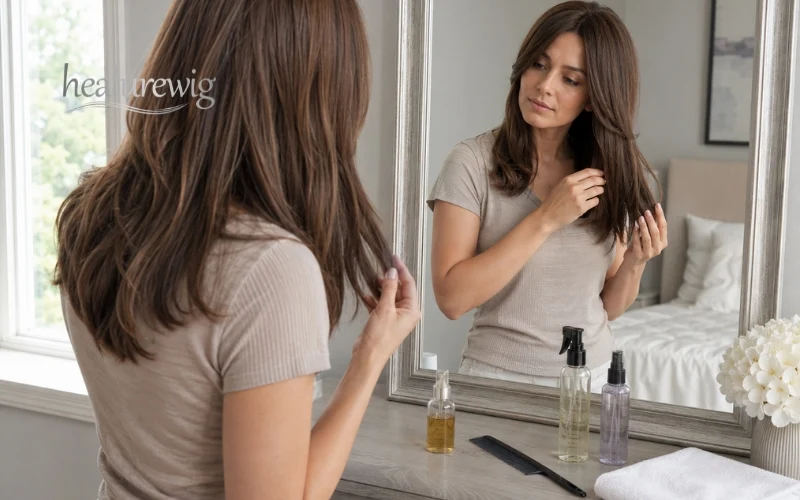
Cuticle swelling in humid environments
Premium human hair retains its organic ability to interact with atmospheric moisture, which becomes a significant challenge during humid summer days. When the air is saturated with water vapor, the hair cuticles open and absorb the ambient moisture.
This rapid absorption causes the hair shaft to swell unpredictably, resulting in the dreaded summer frizz and a loss of styled sleekness. Managing this natural response requires proactive cuticle-sealing techniques before stepping outdoors.
Anti-humectant sealing treatments
To prevent humidity, the hair cuticle needs to be sealed with high-performance anti-humectants to block external water molecules. Ideal for summer, lightweight dry oils — particularly those containing volatile silicones — coat the hair without weighing it down.
Work a minimal amount of anti-humectant serum through the mid-lengths and ends to lock out environmental moisture and lock in intentional hydration. This ensures your sleek styles or polished waves remain unaffected, even in peak tropical conditions.
Aquatic environments: saltwater and chlorine protocols

The osmotic stress of saltwater
The beach is a popular summer vacation destination but salt water can cause serious osmotic damage to non-growing hair systems. The high concentration of sodium is pulling out the necessary moisture from the hair shaft, resulting in the hair strands being severely dehydrated, matted and very susceptible to snapping.
Similarly, chlorinated pool water acts as a harsh chemical stripper, degrading the cuticles and occasionally causing a green chemical tint on lighter hair colors. Exposing a premium investment unit to these aquatic environments requires strict preventative measures.
Pre-swimming saturation and rinsing
The absolute best protocol is to keep premium human hair entirely out of the ocean or pool, utilizing a secondary, older unit for active swimming. However, if exposure is inevitable, pre-saturate the hair completely with clean, fresh water and a heavy leave-in conditioner before entering the pool.
Hair is highly porous; if it is already filled with fresh water and conditioning agents, it cannot absorb as much damaging salt or chlorine. Immediately upon exiting the water, the unit must be thoroughly rinsed and treated with a deep-conditioning mask to neutralize chemical damage.
FAQs: Wearing wigs in the summer
How do I prevent adhesive breakdown in extreme summer heat?
High temperatures and heavy perspiration can liquefy standard liquid adhesives, causing slippage. If you need a more secure option in hot environments, medical grade double-sided tape or silicone grip bands that use friction can help, and won’t leave a sticky residue behind.
Does summer heat permanently alter the texture of human hair wigs?
Ambient heat alone will not permanently change the texture, but extreme UV rays combined with humidity and improper brushing when sweaty can cause mechanical damage. Thermal protectants and gentle detangling can prevent long-term textural changes.
How often should I wash my hair system during the summer months?
The frequency of washing should be increased to every 7 to 10 wears due to greater exposure to sweat, sunscreen and environmental dust. The mild clarifying shampoo also keeps the base materials free of abrasive salt crystals and acidic buildup.
If you have the right protective protocols, it is easy to handle the extremes of the environment of wearing wigs in the summer. By vigorously protecting against UV oxidation, controlling internal scalp moisture, and locking out humidity, your high-end hair system will maintain its flawless quality and luxurious feel all season long.